“UHV extraction” is our own descriptive term, not an industry category. So it is worth explaining exactly what it means — without adjectives.
Pressure decides the boiling point
A liquid boils when its vapour pressure matches the pressure around it. Lower the surrounding pressure and the liquid boils at a lower temperature. It is the reason water boils below 100 °C high in the mountains — and the reason a vessel held far below atmospheric pressure lets a solvent evaporate without much heat.
Why heat matters for champaca
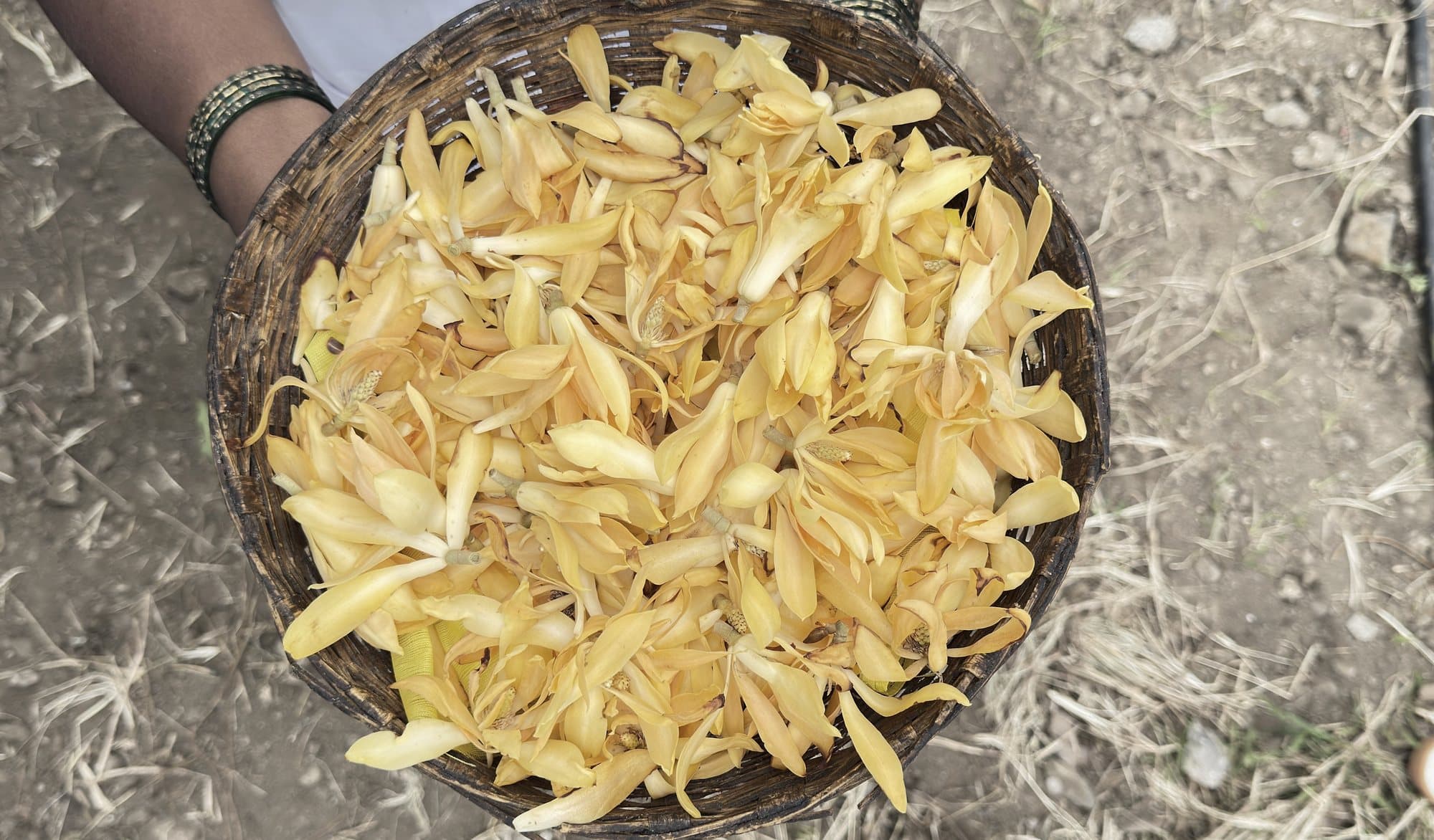
An absolute is made by extracting the flower with a solvent and then removing that solvent. In conventional production the solvent is recovered at or near atmospheric pressure, which means holding the aromatic material at elevated temperature for a sustained period. The lightest, most volatile molecules — the ones that give a living flower its lift — are the first to be altered or lost.
Under ultra-high vacuum, our solvent recovery runs at temperatures 40–60 °C below conventional methods. Less heat, for less time, on the fraction of the material that is least able to tolerate it.
What the analysis shows
The GC-MS report on our Absolute Oil identifies, among others, phenylethyl alcohol, methyl benzoate, methyl anthranilate, α-ionone, benzyl benzoate, benzyl alcohol and linalyl acetate. Several of these are exactly the kind of fragrant, relatively volatile constituents that careless heating puts at risk.
Technical enough to satisfy the perfumer. That is the only test that matters.
Process records for every extraction batch are kept and are available to partners during evaluation or a visit to Narayangaon.